
If you’ve used ChatGPT, Claude, Gemini, or Meta AI, you already know what a chatbot is. You ask a question, and it gives you an answer. You ask it to rewrite an email, and it rewrites the email. Helpful — but the conversation stops there, and everything that happens next is up to you.
Not sure which AI to use? Try our free AI picker — answer two quick questions and get the right tool for the job.
Something new has arrived, and it’s the biggest change in AI since chatbots themselves. It’s called an AI agent, and it’s worth understanding, because it’s going to change how you use your computer, your phone, and maybe your whole workday.
Let me explain it the way I wish someone had explained it to me.
The chatbot you already know
Think of a chatbot like a very knowledgeable friend sitting across the table from you. You ask, “What’s a good recipe for chicken soup?” and your friend tells you. You ask, “Help me write a polite email to my landlord,” and your friend helps you word it.
But notice something: your friend never leaves the table. The recipe doesn’t get cooked. The email never gets sent. A chatbot gives you words, and you do everything else.
That’s not a criticism — it’s just what chatbots are built for. They’re answer machines.
An agent is a helper that does the work
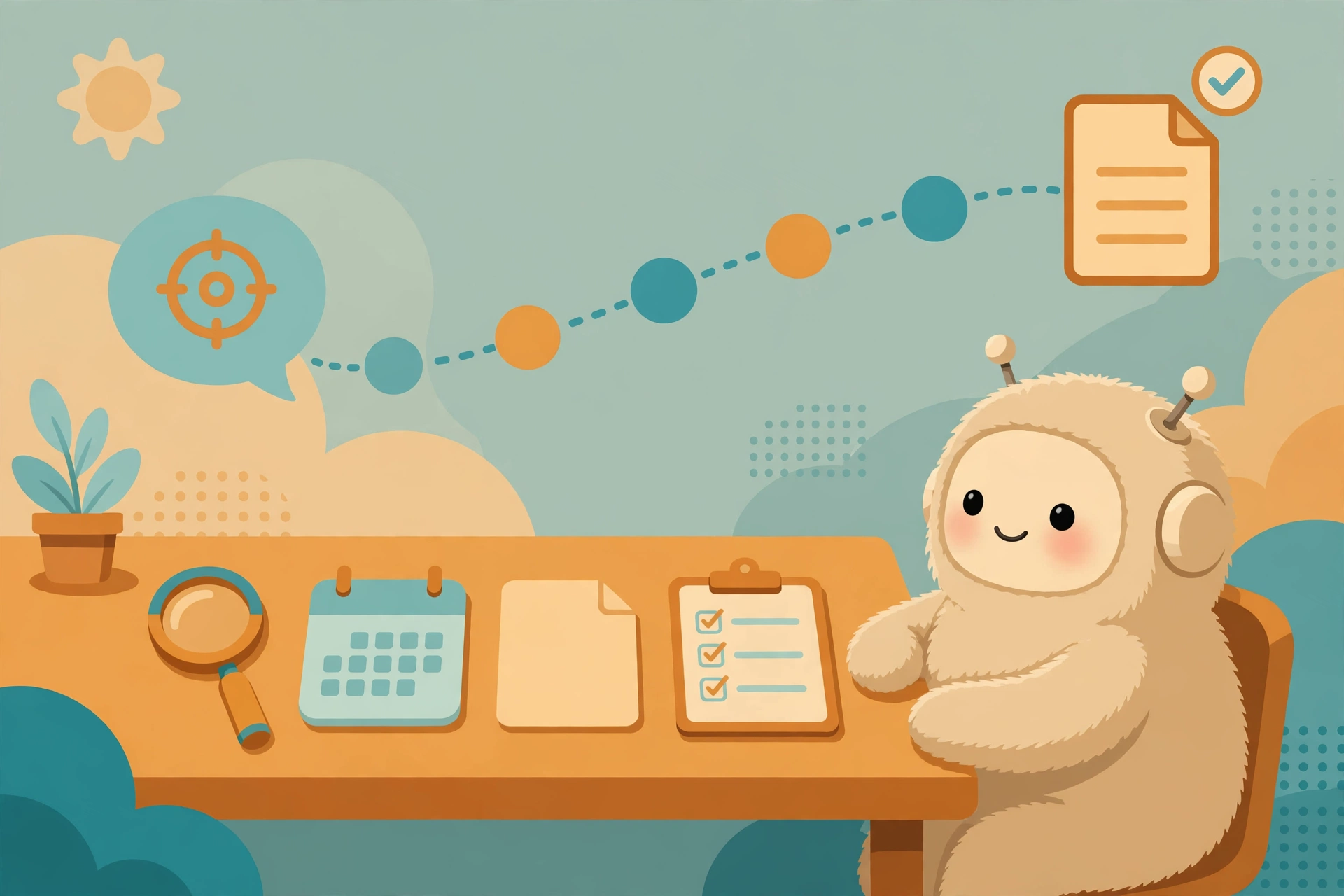
Now imagine a different kind of helper. Instead of sitting across the table, this one rolls up its sleeves. You don’t give it a question — you give it a goal.
“Plan my mom’s birthday dinner,” you say. And instead of just suggesting ideas, it looks up restaurants near you, checks which ones have good reviews, compares prices, looks at your calendar for an open evening, and comes back with: “Here are three options, here’s the menu for each, and this one has a table free on Saturday at 7. Want me to book it?”
That is an AI agent. The difference is simple:
• A chatbot answers questions.
• An agent completes tasks.
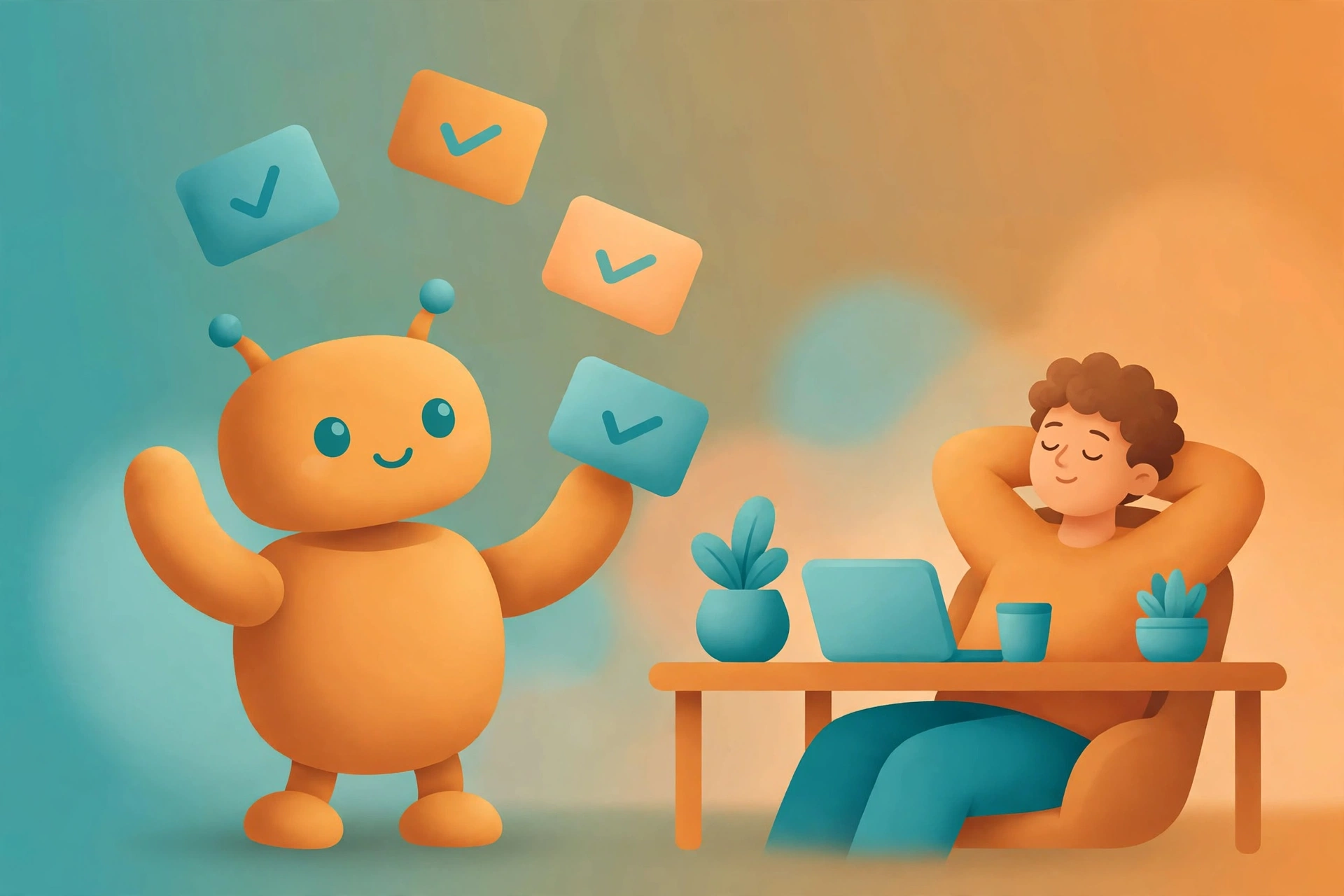
You give it an outcome, and it figures out the steps, takes those steps, checks its own work, and reports back to you. It’s the difference between asking for directions and having a driver take you there.
How do they actually do all that?
This is the part that sounds like magic, but it’s actually pretty down to earth. An agent is built from three simple ideas.
- It gets a goal, not just a question. Instead of “answer this,” you say “accomplish this.” The agent breaks your goal into smaller steps, the way you would: first find restaurants, then check reviews, then check the calendar, then book.
- It has tools — like hands. A chatbot only has words. An agent can use tools: it can search the web, read your calendar, look at your email, fill in forms, and click buttons on websites. Tools are what turn “I know the answer” into “I’ll go do it.” When people say an agent can “use your computer,” this is what they mean.
- It has a memory — like a notebook. An agent keeps notes as it works: what it already tried, what worked, what didn’t. So if the first restaurant is fully booked, it doesn’t start over from scratch — it moves on to the next one. It can also remember things about you between conversations, like your preferences, so it gets more useful over time.
Put those three together — a goal, tools, and memory — and you get something that works more like a real assistant and less like a search box.
This isn’t science fiction anymore — it’s 2026
A couple of years ago, agents were mostly experiments that tech people played with. This year, they went mainstream.
Almost every big name in AI now has an agent offering. ChatGPT can browse the web and work through multi-step tasks. Claude can work on complex projects across many steps. Google’s Gemini connects to live data and your Google apps. Microsoft built agent features into Copilot. Meta launched Muse, a personal assistant that can take actions on your behalf, in September 2026 — and it shot to the top of the app charts within days.
There’s also a whole world of smaller and open-source agents, like Manus and OpenClaw, built by independent teams. The point isn’t to memorize product names. The point is that the shift is real: the industry has moved from “ask the AI a question” to “give the AI a job.”
But wait — is it safe? Who’s in charge?
This is the right question, and I’m glad you’re asking it, because it’s the question I asked too.
Here’s the good news: the agents being built for everyday people are designed with guardrails. A well-built agent asks before doing anything important — booking, buying, sending messages in your name. You set the boundaries: what it’s allowed to do on its own, and what needs your okay first.
Think of it like hiring an assistant. You wouldn’t hand a new assistant your credit card on day one. You’d say, “Research the options and bring me a recommendation, but don’t book anything until I say so.” That’s exactly how you should treat an AI agent: give it the research, keep the decisions.
Two practical rules I follow:
- Start with tasks that don’t cost money or send messages. Research, planning, organizing, summarizing — these are perfect first jobs for an agent.
- Always check the work. An agent is fast, but it’s not perfect. Review what it did the way you’d review a human assistant’s work. The five minutes you spend checking saves you from the mistakes it might make.
Agents don’t replace your judgment. They do the legwork so your judgment has better material to work with.
What this means for you
Here’s why I’m writing about this on a site about learning. For twenty-six years, my goal has been to help people learn the tools that make their lives better. AI agents are the next one of those tools — and the people who understand them early will have a real advantage.
You don’t need to be technical. You don’t need to write code. You just need to learn a new habit: instead of asking the AI for information, start giving it small jobs. “Compare these three laptops and make me a table.” “Find the cheapest flights for these dates and summarize the options.” “Go through my inbox and draft replies to the ones that need answers.”
Start small. Stay in charge. Check the work. And watch how much of the boring, time-eating part of your day starts disappearing.
The chatbot answered your questions. The agent does your errands. That’s the whole story — and honestly, I think the errands were the part we all wanted help with anyway.