
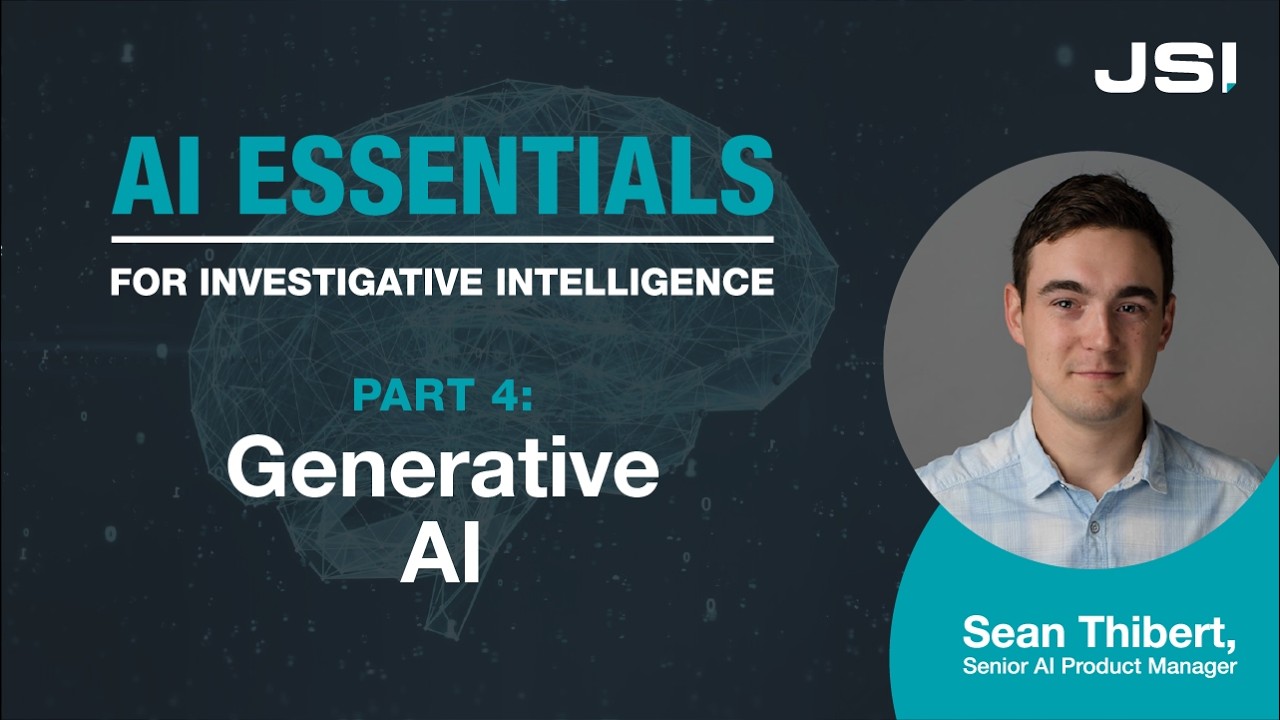
Generative AI is one of the most-hyped capabilities in investigative work, and one of the riskiest to get wrong. Used well, it can compress hours of transcripts, body-worn camera footage, and multilingual content into something teams can actually act on. Used poorly, it fabricates facts and mirrors biases baked into its training data, quietly steering analysts toward incorrect conclusions.
In Part 4 of our AI Essentials for Investigative Intelligence series, we examine generative AI: what it actually does, where it adds value in investigative workflows, and the limitations and risks teams need to account for before deploying it.
This episode explores:
* Summarizing long transcripts, interviews, and body-worn camera footage
* Moving from classifying/retrieving data to generating new content
* Hallucinations, bias, and synthetic media (including deepfakes)
* Why grounding outputs in source data with inline citations is non-negotiable
This video is the fourth in a 6-part series exploring how AI can responsibly support high-risk investigative workflows.
Part 1: https://youtu.be/pSfgzyhJf_o?si=gcDATaKZACK0VjQm
Part 2: https://youtu.be/-tF0LlRh3K0?si=gH9Cm4K8wO5czqpy
Part 3: https://youtu.be/EAlpTvPoN18
source


Leave a Reply