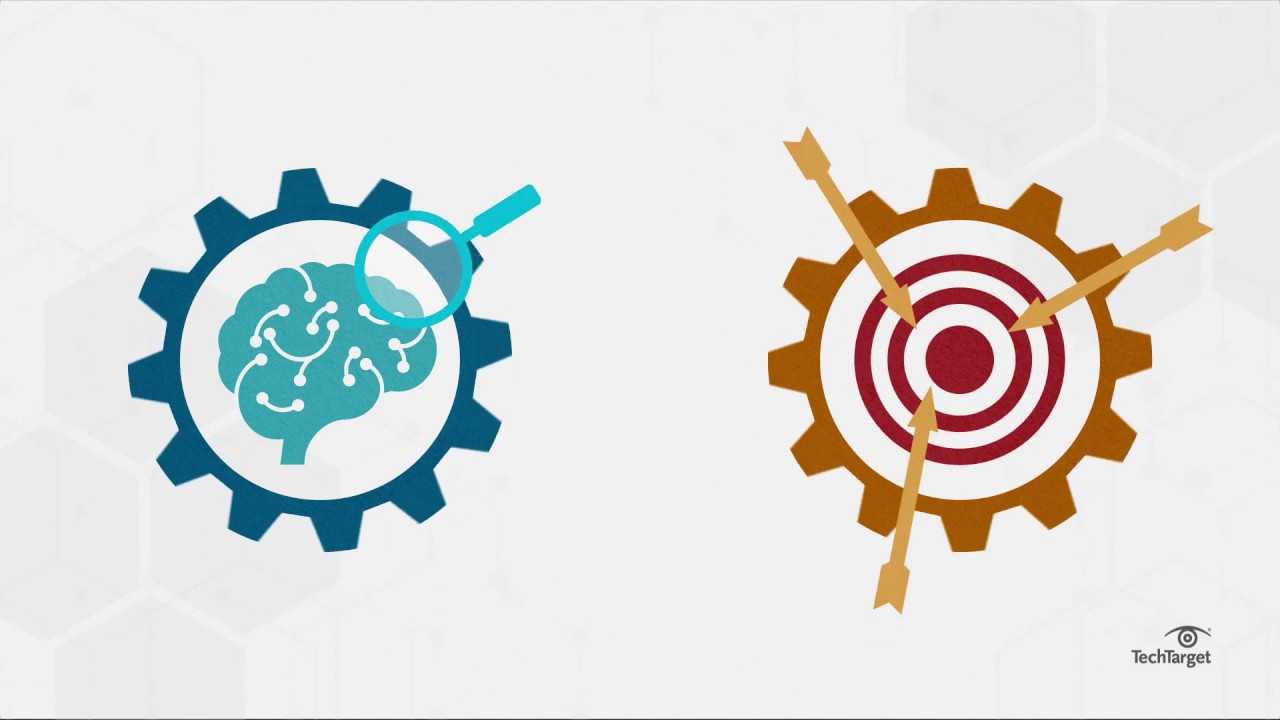
The most common approaches to machine learning training are supervised and unsupervised learning — but which is best for your purposes? Watch to learn more about the differences between supervised and unsupervised machine learning and how each approach is used.
Machine learning is a type of artificial intelligence that allows software applications to become more accurate at predicting outcomes over time, without being explicitly programmed to do so.
Supervised machine learning requires the data scientists to provide input and output data, with the goal of the algorithm eventually predicting the correct outputs based on the given input. This type of system is ideal for binary classification, multi-class identification, regression modeling, and ensembling.
Unsupervised machine learning, on the other hand, does not require labels and corresponding outputs to be provided. The algorithm instead uses unlabeled input data and identifies patterns in order to group data. Unsupervised learning is typically used for clustering, anomaly detection, association mining, and dimensionality reduction.
Does your business use supervised or unsupervised learning? How has it worked out? Let us know in the comments and be sure to give this video a like.
Read more about machine learning: https://searchenterpriseai.techtarget.com/definition/machine-learning-ML?_ga=2.224407123.852648059.1592831664-1400387709.1579793109/?utm_source=youtube&utm_medium=description&utm_campaign=rHeaoaiBM6Y&offer=video-rHeaoaiBM6Y
Subscribe to Eye on Tech for more videos covering the latest in business technology, including security, networking, AI, DevOps, enterprise strategy, storage, devices and more:
https://www.youtube.com/EyeOnTech
Stay up to date on the latest enterprise AI news: https://searchenterpriseai.techtarget.com/
Follow us on Twitter: https://twitter.com/TTBusinessTech
Like us on Facebook: https://www.facebook.com/TechTargetBusinessTechnology/
#MachineLearning #SupervisedVsUnsupervisedLearning #EyeOnTech
source